


- 27/09/2026
Cinema for Breakfast, fifth season
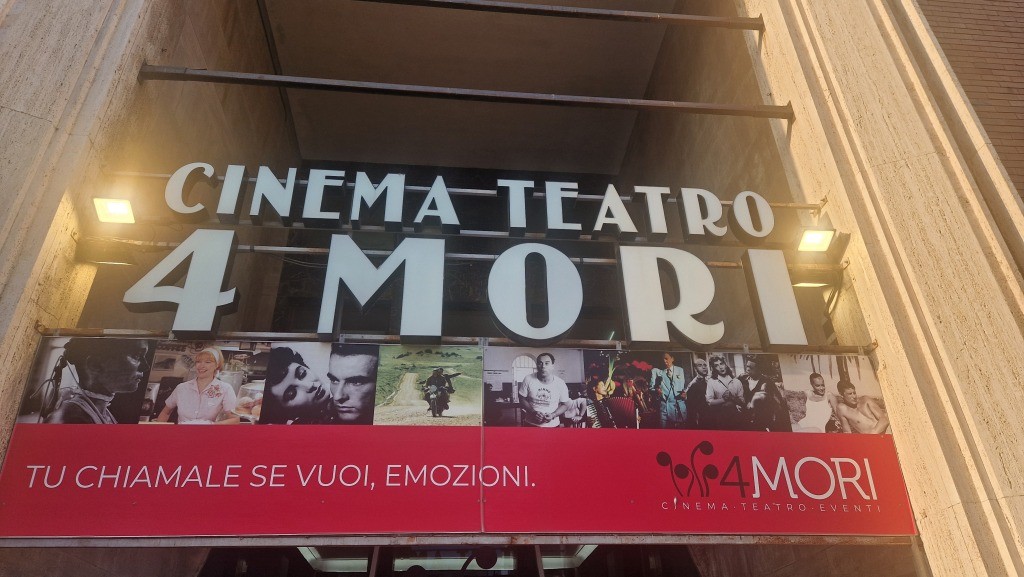
Special preview: Sunday, September 27, 2026 at Cinema 4 Mori, via Pietro Tacca 16
in the program of the Deep Festival 2026 curated by Mo-Wan Teatro
10.00 am: conference by Massimo Ghirlanda “Pinocchio at the Cinema”
10.45 am: Presentation of the Cinema at Breakfast program; screening of the film The Fantastic Planet by René Laloux. Introduced by Alessio Porquier.
Come back, after the success of the previous editions, CINEMA AT BREAKFAST. Now in its fifth Season, the event comes from the consolidated collaboration of associative realities in the Livorno area: Centro Studi Commedia all’italiana, 50&Over University of Livorno, FiPiLi Horror Festival, Circle KInoglaz, Filippo Brandolini’s Kiosk, with the participation of the Municipality of Livorno. The aim is to promote a collective and shared cinematic experience by enhancing the historical screening spaces in the city: Cinema Quattro Mori, Cinema La Gran Guardia, Centro Artistico il Grattacielo, Cinema Salesiani.
The theme chosen for this edition is “The seasons of life” which guided the selection of films on the schedule, to be introduced by experts and film critics.
This fifth season presents a path of eleven appointments that will take place on Sundays from September 2026 to February 2027, combining the screening moment with the conviviality of a shared breakfast, set up in the adjacent spaces to the screening room and included in the ticket.
The events of Cinema at Breakfast indeed include breakfast starting at 09.15 am and the start of the screening at 10.30 am. The entrance ticket is 9 euros including breakfast. In the program is a Special for children with the screening of two films on November 8 and January 10: children under 11 pay 5 euros including breakfast.
This 5th edition will be opened by a special preview within the Deep Festival 2026, curated by Mo-Wan Teatro (September 25 – October 4).
Sunday, September 27 at Cinema 4 Mori, via Tacca, from 10:00 am to 10:45 am, Cinema at Breakfast, Deep Festival and Biblioteca dell’Istituto Vespucci-Colombo, for the bicentennial of the birth of the writer Collodi Carlo Lorenzini, journalist and writer born in Florence on November 24, 1826, will propose “Pinocchio at the cinema” a lesson held by the teacher and cinema historian Massimo Ghirlanda on some questions regarding the multiple cinematographic adaptations that brought the Collodi character to the big screen: what fascinated directors and screenwriters the most about this story? Why is the puppet a universal icon? How many cinematographic adaptations are there? Which is the most successful work? How many projects have failed and how many have remained unfinished?
At the end of the lesson, the organizers will present the Cinema at Breakfast Season 5 program. Immediately after, the first film on the schedule will be screened: “The Fantastic Planet” (La Planète sauvage) animated film (France, Czechoslovakia 1973 – 1h12m) directed by René Laloux. Based on the science fiction novel “Homo Domesticus”, the film is considered a masterpiece of European animated science fiction, it won the Special Jury Prize at the Cannes Film Festival in 1973.
The story is set on the planet Ygam, inhabited by giant and advanced blue humanoid beings called Draag, who constantly practice meditation. The Draag keep as pets the Oms, tiny humans who survived the destruction of their home planet. Terr, a young Om raised in captivity, manages to escape carrying with him an electronic cap that transmits the knowledge and wisdom of the giants, joining a community of wild Oms to attempt rebellion. The film addresses deep philosophical themes, oppression and the right to freedom, dragging the viewer into an unforgettable psychedelic kaleidoscope.
René Laloux, French director, animator, and screenwriter, was born on July 13, 1929 in Paris and died on March 15, 2004 in Angoulême. A prominent figure in adult animation, he often explored science fiction and surreal themes. Among his animated masterpieces, besides The Fantastic Planet, we remember The Time Masters (1982) and Gandahar (1988).
Alessio Porquier is the artistic director of the FI PI LI Horror Festival, a film and literary event dedicated to horror and fantasy.
Massimo Ghirlanda, graduated in Literary Theory with Remo Ceserani, teaches in high schools and is one of the founders of the Centro Studi Commedia all’italiana in Castiglioncello, of which he has been president since 2009. He is the creator of Cinema Lessons in Livorno. He has held courses in the History of cinema and has been interested in Italian filmmakers, writing articles for Cabiria and Bianco e Nero. In 2007, for the publisher Pacini, he published the book Castiglioncello e il cinema. I film, i luoghi e i personaggi. He is the director of the series I Quaderni di Storia del cinema of the publishing house Erasmo, of which he edited the critical editions of the screenplays of Il Sorpasso by Scola and Maccari and In nome del popolo italiano by Age and Scarpelli. He has been part of the jury of the Suso Cecchi d’Amico Award for Best Screenplay since 2012. In 2022 in Trevico, for his cultural activity, he received the Scola Award.
Next films on the schedule
Sunday, October 11, 2026
THE HOUSE WITH LAUGHING WINDOWS
by Pupi Avati, Italy 1976 – 1h50m
Cinema 4 Mori – Via Pietro Tacca 16
The film will be introduced by Niky Argento
The House with Laughing Windows – The story revolves around Stefano, a young man called to restore a terrifying fresco in a country church, a work of a mad painter who died by suicide. As the boy carries on his work, the locals begin to exhibit increasingly unusual behaviors. Soon Stefano realizes he has plunged into a disturbing situation and begins to fear for his own safety.
Pupi Avati, director, screenwriter, and film producer, was born on November 3, 1938 in Bologna. A versatile filmmaker among the most prolific in Italy, he successfully spanned from comedy to drama and thriller/horror films, inaugurating the Gothic vein. Among his numerous works are Christmas Present (1986), Story of Boys and Girls (1989), The Heart Elsewhere (2003), and Mr. Devil (2019).
Niky Argento is a content creator and cultural disseminator. Since 2017 he has been involved in cine-tourism and since 2018 he has been carrying out his project on social media, telling the story of film locations.
Sunday, October 25, 2026
WE ALL LOVED EACH OTHER SO MUCH
by Ettore Scola, Italy 1974 – 2h05m
Cinema La Gran Guardia – Via del Giglio 18
The film will be introduced by Chiara Tognolotti
We All Loved Each Other So Much is a film from 1974 directed by Ettore Scola, dedicated to the memory of Vittorio De Sica. The story follows the lives of three friends, Gianni, Nicola, and Antonio, former partisans united by the same ideals during the Liberation struggle in the Second World War. As the years pass and after Liberation, their paths diverge: Antonio becomes a stretcher-bearer in a hospital, Gianni a wealthy lawyer who has married the daughter of a ruthless real estate developer, and Nicola a teacher who is excluded from teaching due to his ideas about neorealist cinema. Their destinies intersect repeatedly against the backdrop of post-War Italy to the Seventies, sharing a love for the beautiful Luciana, an aspiring actress. Through memorable performances, the film mixes melancholy and satire, evoking betrayed ideals, disappointments, and defeats of an entire generation.
Ettore Scola, director and screenwriter, was born on May 10, 1931 in Trevico (Avellino) and died on January 19, 2016 in Rome. Considered one of the masters of Italian comedy, he was able to tell with lucidity and bitter irony the historical and social changes in Italy. Among his most beloved and awarded films, besides We All Loved Each Other So Much, are A Special Day (1977), Ugly, Dirty, and Bad (1976), and The Family (1987).
Chiara Tognolotti is an associate professor at the Department of Civilization and forms of knowledge at the University of Pisa, where she teaches Aesthetics of Cinema and History of Italian cinema. She studies French cinema of the silent and classical period and modern Italian cinema from a historical-theoretical perspective with a particular focus on gender studies. Among her latest works are the monographs The Fall of the House of Usher (Jean Epstein, 1928). Photogenies, surfaces, metamorphoses (Mimesis 2020); From the photogenic of real to the theory of a cinema beyond the real: the Jean Epstein archipelago (Kaplan 2020, with Laura Vichi), and the edited volumes Cinderella, Galatea, and Pygmalion. Telling the female divism in cinema between fairy tale and myth (Edizioni ETS 2020) and The beauty of things. The thought and practice of Louis Delluc’s cinema (Edizioni ETS 2022). She is part of the FAScinA research network – Annual Forum of female scholars of cinema and audiovisual arts.
Sunday, November 8, 2026
Special for Children
THE NEVERENDING STORY
by Wolfgang Petersen, West Germany, USA, 1984 – 1h30m
Cinema Salesiani – Viale del Risorgimento 85
The film will be introduced by Enrica Notarfrancesco
In collaboration with Orto degli Ananassi and Festival Con-Fusion
The NeverEnding Story is a fantastic film from 1984 directed by Wolfgang Petersen, a stop-motion musical animation featuring a deep message about the importance of dreams. The protagonist is Bastian, an orphaned boy with a dreamy mother, who to escape bullies takes refuge in a bookstore. There he starts reading a mysterious magical book that transports him to Fantasia. The fantastic realm is ruled by the Childlike Empress, who falls seriously ill, and is threatened by “The Nothing”, a dark entity erasing everything. The brave young warrior Atreyu sets out to find a cure to save the Empress and prevent the end of Fantasia.
Wolfgang Petersen, German director, was born on March 14, 1941 in Emden (Germany) and died on August 12, 2022 in Los Angeles. Internationally acclaimed thanks to the underwater masterpiece Das Boot (1981), he later landed in Hollywood directing great commercial successes such as In the Line of Fire (1993), Air Force One (1997), The Perfect Storm (2000), and Troy (2004).
Enrica Notarfrancesco teaches Discovery Theater and Child Theater courses at the Teatro della Brigata in Livorno. In 2011, she graduated in Gestalt Counseling and the following year obtained the qualification of professional counselor, dedicating herself to individual, parental, school, business, and elderly counseling activities. She also leads theater workshops and educational projects for children and young people, aimed at promoting contact with others and fostering emotional and relational self-awareness.
Sunday, November 22, 2026
UMBERTO D.
by Vittorio De Sica, Italy 1952 – 1h25m
Centro Artistico il Grattacielo – Via del Platano 6
The film will be introduced by Massimo Ghirlanda
Umberto D. is a 1952 drama film directed by Vittorio De Sica. Recognized as a timeless masterpiece of Italian neorealism, the film portrays a bitter and shocking picture of loneliness, the marginalization of old age, and society’s indifference. The film tells the dramatic daily life of Umberto Domenico Ferrari (portrayed by Carlo Battisti), an elderly former civil servant forced to survive on a wholly insufficient pension. Burdened by debts and systematically threatened with eviction by the landlady, Umberto sees any prospect of a decent life denied to him. Forced into destitution, he almost resorts to begging and even contemplates suicide by trying to throw himself under a train. The only affection he has left, his small and loyal dog Flaik, stops him just in time and reconciles him with life.
Vittorio De Sica, director, actor, and screenwriter, was born on July 7, 1901 in Sora and died on November 13, 1974 in Neuilly-sur-Seine. Considered one of the great masters of world cinema, he directed masterpieces such as Shoeshine, Bicycle Thieves, Umberto D., and The Garden of the Finzi-Continis.
Massimo Ghirlanda, graduated in Literary Theory with Remo Ceserani, teaches in high schools and is one of the founders of the Centro Studi Commedia all’italiana in Castiglioncello, of which he has been president since 2009. He is the creator of Cinema Lessons in Livorno. He has held courses in the History of cinema and has been interested in Italian filmmakers, writing articles for Cabiria and Bianco e Nero. In 2007, for the publisher Pacini, he published the book Castiglioncello e il cinema. I film, i luoghi e i personaggi. He is the director of the series I Quaderni di Storia del cinema of the publishing house Erasmo, of which he edited the critical editions of the screenplays of Il Sorpasso by Scola and Maccari and In nome del popolo italiano by Age and Scarpelli.
Sunday, November 29, 2026
THE 400 BLOWS
by François Truffaut, France 1959 – 1h39m
Cinema La Gran Guardia – Via del Giglio 18
The film will be introduced by Francesca Capasso
Film in original version with Italian subtitles
The 400 Blows is a 1959 film directed by François Truffaut. The story revolves around Antoine Doinel, a fragile, lonely, misunderstood twelve-year-old Parisian. The boy sleeps in a bed in a narrow corridor of a small apartment. To escape this reality and rebel, Antoine begins to skip school and commit petty thefts. When he steals a typewriter with his friend René to pay for a trip to the sea, he is arrested and sent to a reformatory. Famous for its ending where the boy runs away to see the sea, the film is a sharp criticism of absent families and school institutions.
François Truffaut, director, screenwriter, and film critic, was born on February 6, 1932 in Paris and died on October 21, 1984 in Neuilly-sur-Seine. He was one of the founders and leading figures of the French New Wave, capable of translating absolute love for cinema on the screen. Among his celebrated works are Jules and Jim (1962), Stolen Kisses (1968), Night Moves (1973), winner of the Oscar for Best Foreign Film, and The Last Metro (1980).
Francesca Capasso studied Foreign Languages and Cinema, combining her interest in cultures and languages with a passion for visual arts. She continued her academic path in France, earning a PhD in Bela Tarr’s cinema. Currently, she is a teacher focusing mainly on photography, exploring the relationship between image, culture, and narrative.
Subscribe to the newsletter to stay updated
Don't miss any news about events in Livorno and surroundings.